
Why Vending Is a Smarter Business Than Most People Think
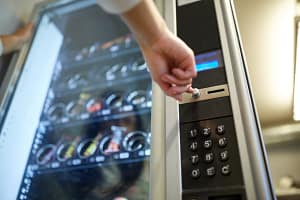
When picturing a vending machine, most people think of a beat-up machine humming in a hospital hallway, dusty old bowling alley, or the sticky common room of their college dorm. They might not immediately imagine a serious business opportunity.
But that perception is exactly why smart operators are keeping profitable routes, quietly in the background, while everyone else looks the other way.
Forest Cole Langston saw what most people miss. It’s why he launched Blue Line Vending of Texas — and why he thinks more Texas entrepreneurs should be giving this industry a harder look.
The Vending Industry Is Bigger Than You Think
The U.S. vending machine market was estimated at $7.32 billion in 2025 and is projected to reach $15.55 billion by 2035. Globally, the market is valued at $26.1 billion in 2026 and forecast to reach $33.38 billion by 2031. North America holds the largest regional share worldwide, driven by a large workforce, a strong convenience culture, and the rapid adoption of cashless payment technology.
Definitely not an industry in decline.
The industry is also modernizing in ways that make it more attractive for new operators. Smart and IoT-enabled vending units are scaling at a 9.78% CAGR as operators adopt real-time inventory analytics, predictive maintenance, and cashless payment systems. The days of driving a route blind are over. Operators who embrace connected equipment can monitor inventory, track sales, and manage service schedules without leaving their desk.
What Makes Vending a Smart Business Model?
The main appeal of a vending machine business is that it generates revenue around the clock—no storefront, large staff, or traditional retail infrastructure eating into your margins.
Here’s what the numbers have to say about it:
- One vending machine can generate up to $1,000 in monthly revenue in busy locations, with snack profit margins averaging 40-60%.
- Small operators running one to five machines can net $15,000 to $30,000.
- Full-scale operators with 50 or more machines average $25,000 in monthly profit.
For operators willing to invest in modern equipment, cashless payment technology increases per-machine profits by up to 50%.
The other thing worth noting is the pace. Vending is one of the few businesses you can build deliberately, adding machines as revenue supports expansion rather than taking on debt to grow fast. That kind of measured scaling is exactly how Forest Cole Langston approaches business — steady, accountable, built to last.
What Serious Operators Know That Beginners Miss
Here’s where many first-time vending operators get tripped up. They focus on getting machines placed and not enough on where those machines go. Location is the single biggest variable in this business. A machine in the wrong environment — low foot traffic, wrong demographic, poor visibility — will drag down your entire operation. High-traffic, captive-audience locations like offices, gyms, warehouses, and healthcare facilities consistently outperform everything else.
The other lesson that separates profitable operators from struggling ones came into sharp focus in 2025. The most successful operators shifted away from aggressive expansion and toward refining performance at existing locations. Operators who treated location partners as long-term relationships gained access to better sites and stronger placement stability. That’s not a complicated insight, but many people in this industry learn it the hard way. Kkyr
Product mix matters too. Knowing your location’s demographics and stocking accordingly — not just loading a machine with whatever’s cheapest to buy in bulk — is the difference between a machine people use and one they walk past. And service consistency, showing up on schedule and keeping machines clean and fully stocked, builds the kind of trust with location partners that protects your placement contracts for the long haul.
These are the principles Forest Cole Langston built Blue Line Vending of Texas around: quality service, dependable operations, and a community-first approach to every placement decision.
Is Vending Right for You?
Vending works best for operators who treat it like a real business. It rewards organization, patience, and consistency — and it punishes people who approach it as a passive side hustle that runs itself. The barrier to entry is lower than most ventures, but the operators building sustainable, profitable routes are the ones bringing genuine discipline to the work.
For Texas entrepreneurs seeking a scalable business with recurring revenue, low overhead, and real community impact, vending deserves serious consideration. Blue Line Vending of Texas is Forest Cole Langston’s devotion to that model, and it reflects the same ethics he brings to every venture he builds: service, accountability, and long-term thinking rather than short-term shortcuts.